Source thermoforming petg sheet for Blister Packing Printing Vacuum Forming
Compare 30 thermoforming petg sheet options from verified suppliers. Buyers can evaluate tensile strength, water absorption, and surface finishes like high glossy or silk touch for blister packing and vacuum forming applications; compare the available evidence and request quotations based on your requirements.
Key considerations
Products List




Comprehensive Sourcing Guide
Thermoforming PETG Sheet Sourcing Guide
Product Scope and Observed Listing Signals
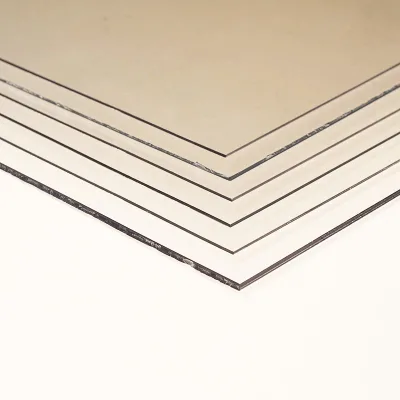
The market for thermoforming PETG sheets presents a diverse array of options, primarily categorized by material type and surface finish. Listings frequently highlight Color Plastic Sheets made from PETG, which offer high transparency and customizable color options to meet specific branding or aesthetic requirements. These sheets are often engineered with features such as anti-scratch resistance and easy-clean surfaces, making them suitable for high-visibility applications where durability and appearance are paramount. Buyers should note that while PETG is a primary focus, many suppliers also offer PVC, PP, and PC sheets, requiring careful distinction to ensure the correct material properties are selected for the intended thermoforming process.
Observed listing signals indicate a wide range of customization capabilities, with suppliers offering tailored sizes and thicknesses to match precise production needs. The typical width ranges from 300 to 1220 mm, with some providers accommodating demands up to 1300 mm, allowing for flexibility in large-scale manufacturing operations. Surface finishes vary from high glossy to silk touch or matte, influencing the final look and feel of the thermoformed product. Additionally, the availability of both sheet and roll formats, along with various packing methods like wooden pallets or boxes, suggests that logistics and handling requirements should be considered early in the sourcing decision to optimize supply chain efficiency.
Technical Specifications to Verify
When evaluating PETG sheets for thermoforming, tensile strength is a critical mechanical property that determines the material's ability to withstand stress during forming. Observed data suggests tensile strength values ranging from 41 to 130 MPa, depending on the specific grade and formulation of the sheet. Buyers must verify which strength category aligns with their forming pressure and tooling capabilities, as higher strength may require more robust equipment but offers greater durability in the final product. Additionally, contraction percentage is a vital factor for dimensional accuracy, with observed values between 0.4% and 1.4%, ensuring that the thermoformed parts maintain their intended shape and size after cooling.
Water absorption rates also play a significant role in the quality of the final thermoformed item, as excessive moisture can lead to defects such as bubbles or cloudiness. The supplied facts indicate water absorption levels between 0.1% and 0.4%, which are generally low and favorable for high-quality thermoforming applications. Thickness is another key specification, with standard ranges from 0.3 to 1 mm for specific PETG grades, while broader offerings may extend up to 20 mm for other plastic types. Buyers should confirm the exact thickness tolerance and uniformity across the sheet to ensure consistent forming results and minimize material waste during production.
Compliance and Safety Documentation
Ensuring that PETG sheets meet relevant safety and regulatory standards is essential, particularly for applications involving food contact or consumer products. While specific certification statuses are not explicitly confirmed in the observed listings, buyers should request documentation verifying compliance with international standards such as ISO 9001 for quality management, ISO 14001 for environmental management, and ISO 45001 for occupational health and safety. These certifications indicate a supplier's commitment to consistent quality and responsible manufacturing practices, which can reduce risks associated with supply chain disruptions or product recalls.
For thermoformed products intended for packaging or direct consumer use, verifying that the raw materials are 100% virgin or appropriately customized is crucial. Buyers should inquire about the material's compliance with food-grade regulations and any restrictions on additives or colorants used in the manufacturing process. Additionally, understanding the material's behavior under heat and pressure during thermoforming can help prevent safety hazards in the production environment. Requesting material safety data sheets (MSDS) and technical data sheets (TDS) from suppliers provides valuable insights into the chemical composition and handling requirements, ensuring safe storage and processing of the PETG sheets.
Cost Drivers and Commercial Terms
The cost of thermoforming PETG sheets is influenced by several factors, including material composition, thickness, surface finish, and customization requirements. Observed price ranges vary significantly, reflecting differences in quality, volume, and specific product features. Buyers should consider the trade-off between cost and performance, as higher tensile strength or specialized surface treatments may command a premium price. Additionally, the choice between PETG, PVC, or other materials can impact costs, with PETG often being preferred for its clarity and eco-friendly profile, potentially affecting the overall budget.
Commercial terms such as minimum order quantity (MOQ) and payment conditions also play a significant role in the total cost of ownership. Observed MOQs range from 1 to 3000 units, offering flexibility for both small-scale prototyping and large-volume production runs. Buyers should negotiate terms that align with their production schedules and inventory management strategies, considering factors like lead times and shipping methods. Packaging options, such as wooden pallets or paper core wrapping, can also affect logistics costs, so it is important to clarify these details early in the procurement process to avoid unexpected expenses.
Supplier Qualification and Quality Control
Selecting a reliable supplier for thermoforming PETG sheets requires a thorough evaluation of their manufacturing capabilities and quality control processes. Buyers should verify the supplier's origin, with many providers based in regions like Shandong, China, known for their plastic manufacturing expertise. Assessing the supplier's ability to provide customized solutions, such as specific thicknesses, widths, and surface finishes, is crucial for meeting unique production needs. Additionally, understanding the supplier's production methods, such as extrusion or calendering, can provide insights into the consistency and quality of the sheets they produce.
Quality control measures should be a key consideration when evaluating potential suppliers. Buyers should inquire about the supplier's testing protocols for tensile strength, water absorption, and dimensional accuracy to ensure that the sheets meet specified standards. Requesting samples for trial runs can help assess the material's performance in actual thermoforming conditions, allowing for a practical evaluation of its suitability. Furthermore, establishing clear communication channels and contractual agreements regarding quality expectations, defect resolution, and after-sales support can help mitigate risks and ensure a smooth procurement experience.
Long-Term Procurement Checks
Establishing a long-term relationship with a PETG sheet supplier involves regular performance reviews and continuous improvement initiatives. Buyers should monitor key performance indicators such as delivery times, product consistency, and responsiveness to issues to ensure that the supplier meets evolving business needs. Regular audits of the supplier's quality management systems and adherence to agreed-upon standards can help maintain high levels of product quality and reliability. Additionally, staying informed about advancements in PETG technology and market trends can enable buyers to make informed decisions about material selection and sourcing strategies.
Sustainability and environmental impact are increasingly important factors in long-term procurement decisions. Buyers should assess the supplier's commitment to eco-friendly practices, such as the use of recycled materials or energy-efficient production processes. Verifying the recyclability of the PETG sheets and their compatibility with waste management systems can enhance the sustainability profile of the final products. By prioritizing suppliers who demonstrate a strong commitment to environmental responsibility, buyers can align their procurement strategies with broader corporate sustainability goals and contribute to a more circular economy.
FAQs
What is the tensile strength of thermoforming PETG sheets?
Thermoforming PETG sheets typically exhibit a tensile strength ranging from 41 to 50 MPa. This mechanical property ensures the material maintains structural integrity during the forming process. Some variants may reach up to 80 MPa, providing enhanced durability for demanding applications. Buyers should verify specific grade requirements to match their production needs.
Can I customize the size of PETG plastic sheets?
Yes, customization is available for PETG plastic sheets. Standard widths range from 300 to 1220 mm, with thickness options from 0.3 to 1 mm. Custom sizes can be requested to fit specific machinery or design constraints. Suppliers often accommodate these requests to ensure the material fits your exact production specifications.
What surface finishes are available for PETG sheets?
PETG sheets are available in high glossy or silk touch surface finishes. These options allow for aesthetic customization depending on the final product requirements. The material also features anti-scratch and easy-clean properties, ensuring longevity and maintainability. Buyers can select the finish that best aligns with their branding and functional needs.
What is the water absorption rate of PETG sheets?
PETG sheets have a low water absorption rate, typically between 0.2% and 0.4%. This characteristic helps maintain dimensional stability in humid environments. Some high-performance grades may exhibit even lower absorption, below 0.3%. This low moisture uptake is crucial for applications requiring consistent performance and resistance to environmental factors.
How are PETG sheets packaged for shipping?
PETG sheets are commonly packaged on wooden pallets for secure transport. Additional protection may include paper cores, pearl wool, and craft paper wrapping. This packaging method ensures the sheets remain flat and undamaged during transit. Suppliers may also offer wooden box packaging based on specific customer requests for enhanced protection.
What are the primary applications for thermoforming PETG sheets?
Thermoforming PETG sheets are primarily used for blister packing and vacuum forming. They are also suitable for printing and general packaging applications. The material's transparency and ease of forming make it ideal for consumer goods packaging. Buyers can utilize these sheets for creating durable, clear, and visually appealing product displays.